
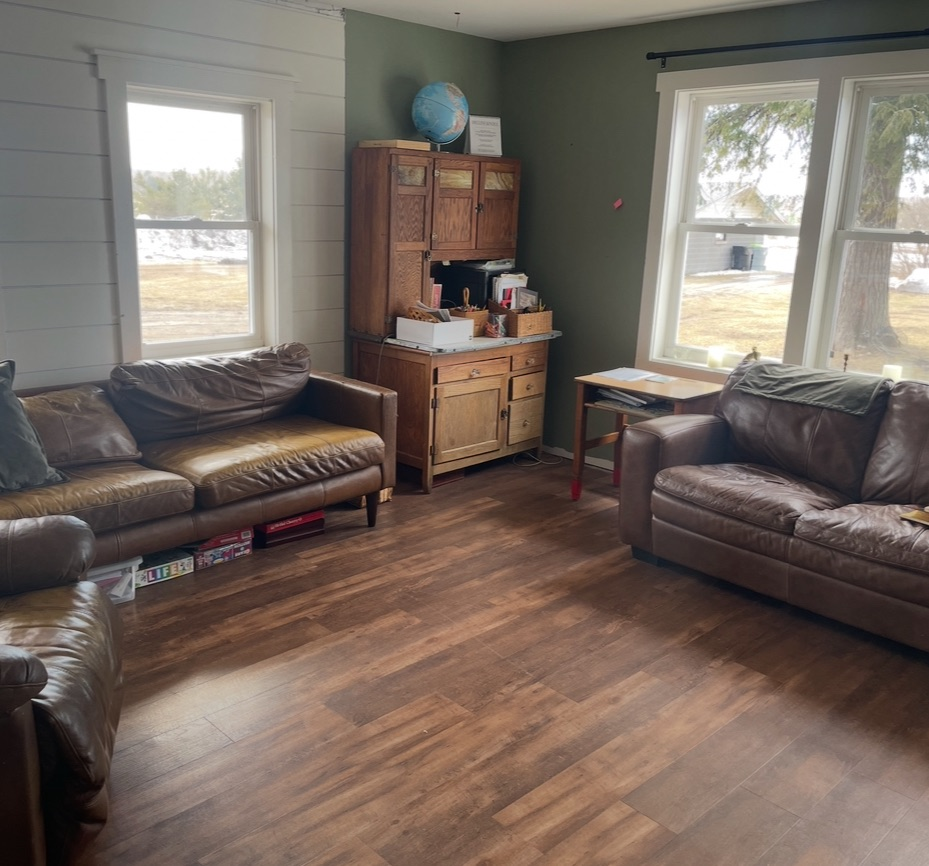
Some people seem to be born with a knack for being neat and tidy. Some, like me, seem to be born with a knack for making messes while trying so hard to be tidy. I admire those who are naturally neat. They have homes where everything is perfectly placed. They live by the saying, “A place for everything and everything in its place.” I must admit, I have tried and tried to be a neat and tidy person, but I always felt like I was failing.
Though I cannot say that I have reached the level of tidiness I once wished to achieve, my life has improved drastically in this area. I would love to share what has helped the most.
I will start by saying I am neurodivergent. If you are too, you most likely have struggled with this in some way. But for those of you who feel hopeless, the bit of hope I would like to offer is this: as a mom of five, my house is much cleaner and tidier than it was when I had only one child. If there was hope for me, I know there is hope for you too.
Like many of us, I had a working mother, and I grew up without a father. The training many women once received in their younger years about how to keep a home just does not seem to be a regular part of our society anymore. The elimination of home economics in schools has also contributed to this. How sad when everyone, male or female, should learn how to care for a home.
Something funny about me as a messy homemaker is that growing up, I was fascinated with books about homemaking and motherhood. I was so excited for middle school so I could take home economics. Then the program was removed. So much of what I learned was on my own accord.
So let us get to the point. What helped me?
The biggest turning point was realizing that I was only cleaning from a place of anxiety. I was not cleaning from joy or stewardship. I was cleaning from panic. When I began working on my anxiety, everything shifted. It started with a CBT do it yourself workbook that helped me break out of an anxious loop that was really inhibiting my abilities as a homemaker and mother. When my mindset changed, I was finally able to work toward the person I wanted to be.
Another mindset shift was letting go of feeling sorry for myself because of all the work I had to do. You will often hear the common tune of feeling sorry for moms because they have so much work. Now please do not misunderstand me. I absolutely believe mothers work incredibly hard, and this role can be overwhelming. It certainly is. But when I stayed in a place of self pity, nothing improved. Reflecting on the fact that many mothers before us, and many mothers right now, are walking this same road can actually be reassuring. We are not alone in it.
Another thing that helped me was Marla Cilley, also known as The FlyLady. I do not follow her methods perfectly, and I never have. But the information and inspiration I learned from her was invaluable. Her book Sink Reflections gave me so much to glean from. Creating a simple daily rhythm, picking up as I go instead of letting piles become overwhelming, and focusing on small consistent habits changed everything for me.
Minimizing the things in your home is a big one, and probably the most important. I tend to lean toward collecting too many things. I love thrifting, antiques, and art supplies. But I have learned that most of us simply have too much stuff. Many of us do not have the option of moving to a bigger home with extra closets and storage rooms. But we almost always have the option of minimizing what we own. When there is less, it is easier to manage, easier to clean, and easier to sort through when it is time to donate or let go.
A bad habit I acquired was holding on to broken things in the hopes that I would fix them one day, or keeping something because I might need it later. When I was a little girl, I hoarded papers, toys, and random objects under my bed until it was completely packed because I thought I might need them. It was pretty bad. My grandma once threw away several trash bags of junk. I was devastated at the time, but I could not tell you now what I even missed.
That mindset sometimes still creeps in. When I go to hold onto something, I ask myself: Can I fix this right now? Is it worth donating, or should I just toss it? Most of the time, tossing it is the safest option.
I have read many books and watched countless YouTube videos about homemaking. The thought of having a beautiful space that I could make my own, decorating with fresh flowers in vases and little bits of my personality throughout, choosing the scents and sounds, and creating a cozy peaceful haven has always inspired me.
Another important step was stopping the comparison. Pinterest perfect homes are works of art. Some people may be able to achieve that level of perfection. But for many of us, especially those of us who are neurodivergent, it simply is not realistic. Our homes do not need to be picture perfect. They are lived in spaces where humans eat, play, learn, and gather. While it is good to maintain a reasonable level of cleanliness, our children and even we ourselves can function in homes that are less than perfect. I am slowly learning that I will never be perfect, and that is okay. I have to decide what matters most to me.
Get your children involved. Teach them from a very young age to pick up their things. Bring them along as you do your chores. They will learn by watching you, and if you start young, they are often eager to help. Yes, a toddler will soak the wall and floor with their rag and soapy water. You will likely have to redo what they helped with. But it is worth it in the long run because you are cultivating in them a healthy relationship with responsibility and the feeling of being needed.
Research supports this too. A long term Harvard study on adult development found that children who did chores growing up tended to become more successful and well adjusted adults because they learned early on that they must contribute to life around them. You can read more about that through the Harvard University Grant Study.
While I still struggle at times, my house is nowhere near as hard to clean as it was ten years ago. I do not have nearly as many things, and I find enjoyment in much of the work I do instead of viewing it only as a burden.
What has helped you in your journey as a homemaker? I would truly love to hear your suggestions.
Books Mentioned
Retrain Your Brain by Seth J. Gillihan
https://www.amazon.com/Retrain-Your-Brain-Behavioral-Depression/dp/1626251134
Sink Reflections by Marla Cilley
https://www.amazon.com/Sink-Reflections-Overwhelmed-FlyLady/dp/0553382179
Home Comforts by Cheryl Mendelson
https://www.amazon.com/Home-Comforts-Art-Science-Keeping/dp/0743272862
The Simple Art of Homemaking by J. R. Miller
https://www.amazon.com/Simple-Art-Homemaking-J-R-Miller/dp/1603743043
You might also enjoy looking for older, vintage homemaking guides at your local library or thrift store. Many old fashioned housekeeping books contain timeless, practical wisdom that still applies today.