
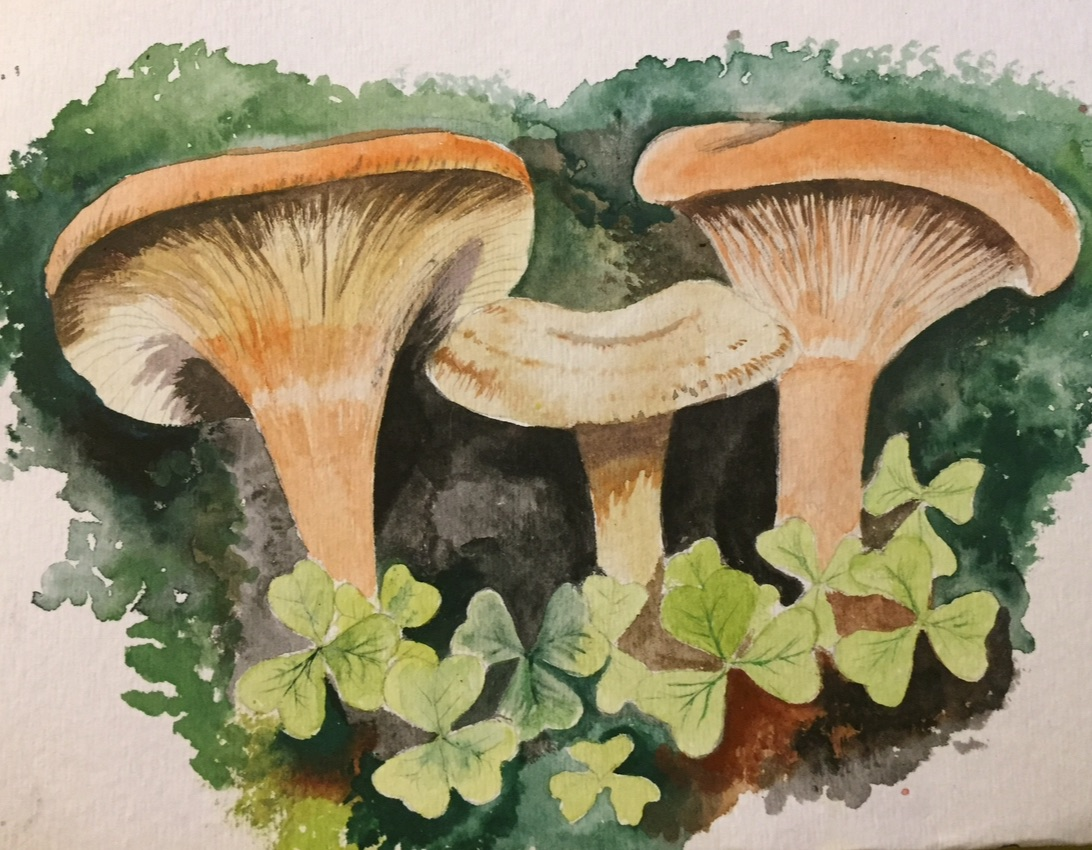
The idea of keeping a nature journal has always intrigued me. Ever since I first encountered it while reading about the homeschooling philosophy of Charlotte Mason, I felt drawn to the practice. Nature journaling is a core part of her recommended curriculum, and once I began looking into it, I was hooked. At my local library, I found several beautiful examples of handwritten and illustrated nature journals that deeply inspired me.
I have made several attempts to start my own nature journal, and so far I have not made it all the way through a single book. Even so, I can honestly say that this practice is both fulfilling and gently therapeutic. The simple act of writing and drawing, with no special skill level required, gave me a sense of satisfaction and groundedness. You truly do improve as you go. More than that, it encouraged me to slow down, focus, and dig a little more deeply into knowing.
No one ever has to see your journal. It can be for your eyes alone. Do not let fear that it is not good enough or not beautiful enough stop you from beginning. The benefits of keeping a nature journal far outweigh any lack of artistic confidence. For me, it encourages me to draw closer to God’s creation. To intimately know His creation is to know Him better.
Have you ever inspected the veins of a leaf or noticed the repeating patterns found throughout nature, such as the Fibonacci sequence? Have you ever truly pondered how everything, including humans, begins as a seed and grows into something incredible? Do you know how far the roots of a mighty tree can reach? Have you experienced the healing power of being fully immersed in nature?
There are limitless things you can study, but I have found it most satisfying to focus on one subject at a time. You may surprise yourself with how deeply interested you become as your knowledge grows. Do not assume this practice will be boring or tedious. Once you begin to dig in, the world of your chosen subject comes alive. This is nourishment for the heart, the mind, and the soul.
If you are new to nature journaling, I will share a few basics. I recommend starting a small collection of nature books. I prefer books over digital research because devices come with endless distractions, and the sheer amount of information online can quickly become overwhelming. Many of my nature books came from thrift stores and yard sales at very little cost.
Your collection does not need to be large. A book on trees, insects, birds, local plants, or edible wild foods is a wonderful place to begin. If purchasing books is not possible or if you are trying to live more minimally, your local library is an excellent resource. There are also beautiful and more in depth works, such as The Hidden Life of Trees, that explore nature in a meaningful and reflective way.
For supplies, I suggest a small notepad for field notes and a mixed media art pad for journaling. I often purchase mine at craft stores during sales, as they offer great quality at a reasonable price. A simple set of drawing pencils, an ink pen, and eventually colored pencils or a small portable watercolor palette are more than enough to get started. An eraser and a pencil sharpener are also important. I like to keep everything in a small cotton bag that I can easily sling over my shoulder whenever I know I will have time to observe and sketch.
This brings me to the best part of nature journaling. Watching and observing.
This is a practice many of us have lost touch with. In a world where everything is fast and immediate, we often forget how to simply sit quietly and observe. This practice is deeply healthy and beneficial. Even if you never draw, paint, or write, the act of sitting still and watching has great value.
When you first begin, this may feel difficult. We are accustomed to constant stimulation and quick scrolling, not the slower rhythm of a mother bird patiently building her nest in spring. Start small. Ten minutes is enough. Over time, you can gently increase the length of your observations. Like any form of exercise, it becomes easier and more enjoyable with consistency. Everything worthwhile grows through patience and small, steady steps.
Nature journaling is also a beautiful skill to pass on to our children. It teaches attentiveness, patience, and the ability to simply be. These are qualities I believe many of us, including my own generation, have slowly lost. Reclaiming them is a gift to ourselves and to those we are raising.
Nature journaling is not about perfection, productivity, or creating something worthy of praise. It is an invitation to slow down, to notice, and to build a quiet relationship with the living world around you. Each page becomes a small record of attention, presence, and reverence. Over time, your journal will hold more than sketches and words. It will hold memories of seasons, moments of stillness, and the simple joy of noticing what was always there. Begin where you are, with what you have, and let the practice unfold gently.